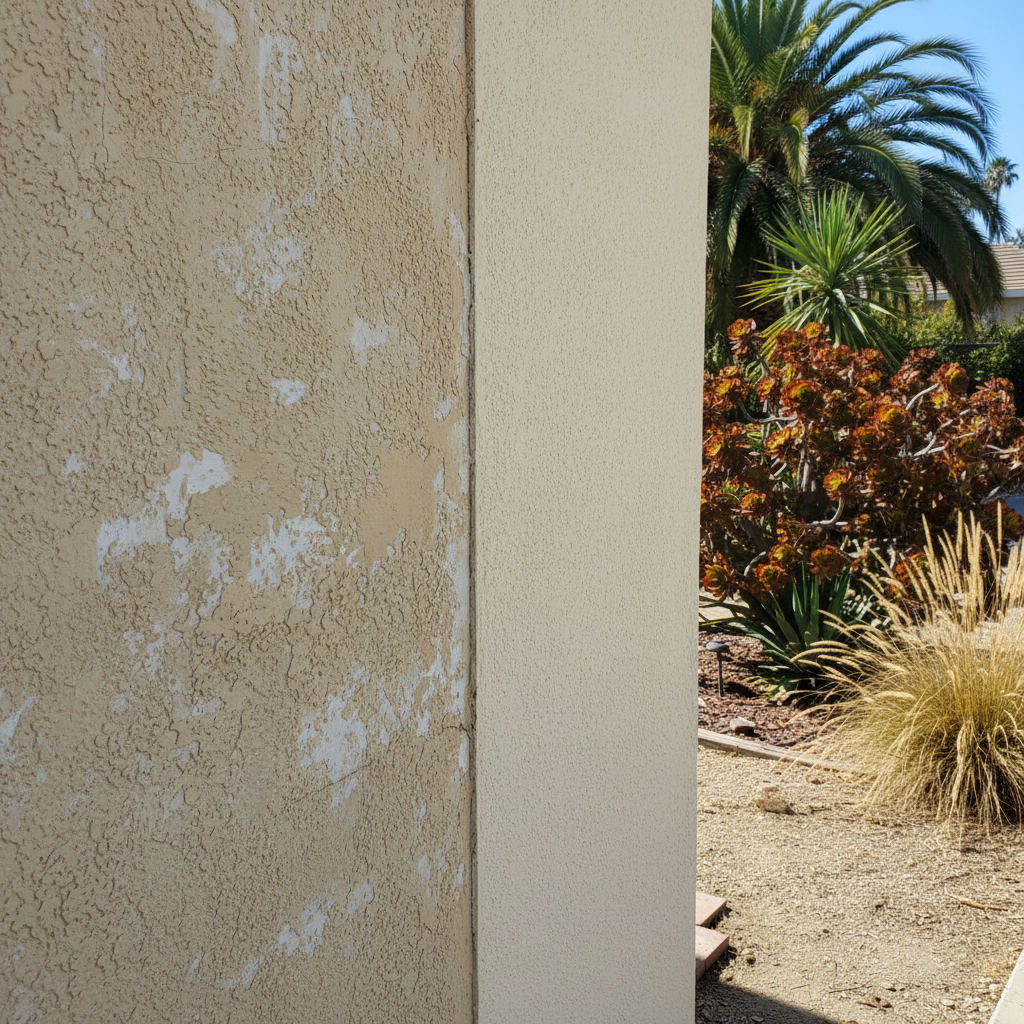
Patching Stucco: The Quick Fix
So, you've got a crack, a hole, or some chipped stucco on your house. Your first thought might be, "Can't we just patch it?" And yeah, a lot of times, you can. Patching is exactly what it sounds like: we clean out the damaged area, apply new stucco material, and try to blend it in with the existing finish.
It's usually the cheaper option upfront, no doubt about it. If you've got a small, isolated crack – maybe from a rogue baseball or a minor impact – a patch can do the trick. It's quicker to do, too. We can often get in and out in a day or two for smaller jobs, depending on the drying times and the complexity of matching the texture and color.
But here's the rub with patching: matching. Stucco isn't like paint where you just pick a color chip. It's got texture, it's got age, and it fades. Even if we get the color spot-on when it's wet, once it dries and cures, and as it weathers, that new patch might stick out like a sore thumb. Think about a house that's been baking in the Pomona sun for 20 years; the original stucco has faded and maybe even discolored a bit. A fresh patch, no matter how skilled the application, is going to look 'new' next to 'old' for a while. Sometimes, it never truly disappears.
Durability can also be an issue. If the underlying problem isn't fixed – say, water intrusion causing the damage – that patch might just be a temporary band-aid. It's good for superficial damage, but if you've got widespread hairline cracks or areas where the stucco is delaminating from the wall, a patch isn't addressing the root cause. You might find yourself patching the patch a few years down the line.
Resurfacing Stucco: The Full Refresh
Now, let's talk about resurfacing. This is a more comprehensive approach. Instead of just fixing a small spot, we're applying a new layer of stucco – often a thin, high-performance acrylic finish – over the entire existing stucco surface. It's basically giving your whole house a fresh, new skin.
The biggest advantage here is a uniform appearance. No more mismatched patches. Your whole house gets a consistent color and texture, making it look brand new. This is a huge plus for curb appeal, especially if you're thinking about selling or just want your home to look its best. It's like getting a full exterior makeover instead of just touching up a scratch on your car.
Durability is also a big win for resurfacing. These modern acrylic finishes are incredibly tough. They're flexible, so they resist cracking better than traditional cement-based stucco, which is a big deal in our area with the occasional tremors or just the natural expansion and contraction from our hot summers and cooler winters. They're also more resistant to fading, mildew, and dirt buildup. Plus, a new, continuous layer can add an extra barrier against moisture, which is always a good thing.
Of course, resurfacing costs more upfront. It's a bigger job, takes longer, and uses more material. We're talking about preparing the entire surface, applying a bonding agent, and then putting on the new finish coat. It's an investment, for sure. But when you factor in the enhanced curb appeal, the improved durability, and the reduced need for future patchwork, that investment often pays off in the long run.
My Recommendation for Pomona Homes
Look, if you've got one or two small, isolated dings on an otherwise perfect stucco wall, a patch might be all you need. We'll do our best to blend it in, and it'll save you some cash.
But for most homes I see around here, especially those built before the 90s, where the stucco is showing its age – maybe you've got multiple cracks, widespread fading, or a texture that's just seen better days – I'm almost always going to recommend resurfacing. Especially if you live in one of those older neighborhoods near downtown or even up by the hills where the homes have been exposed to decades of sun and the occasional ground movement.
Why? Because it gives you a superior, long-lasting result. You get a beautiful, uniform finish that protects your home better and adds real value. With the quality of modern acrylic finishes, you're getting a tough, flexible barrier that's built to last. You won't be calling Alpha Stucco Pomona back in a couple of years to fix another spot that popped up next to the old patch.
Think about it this way: are you looking for a quick fix, or are you looking for a long-term solution that makes your house look fantastic and protects your investment? For most homeowners in Pomona, the full resurface is the smarter play. Give us a call, and we can come out and take a look at your specific situation. We'll give you an honest assessment, no pressure.