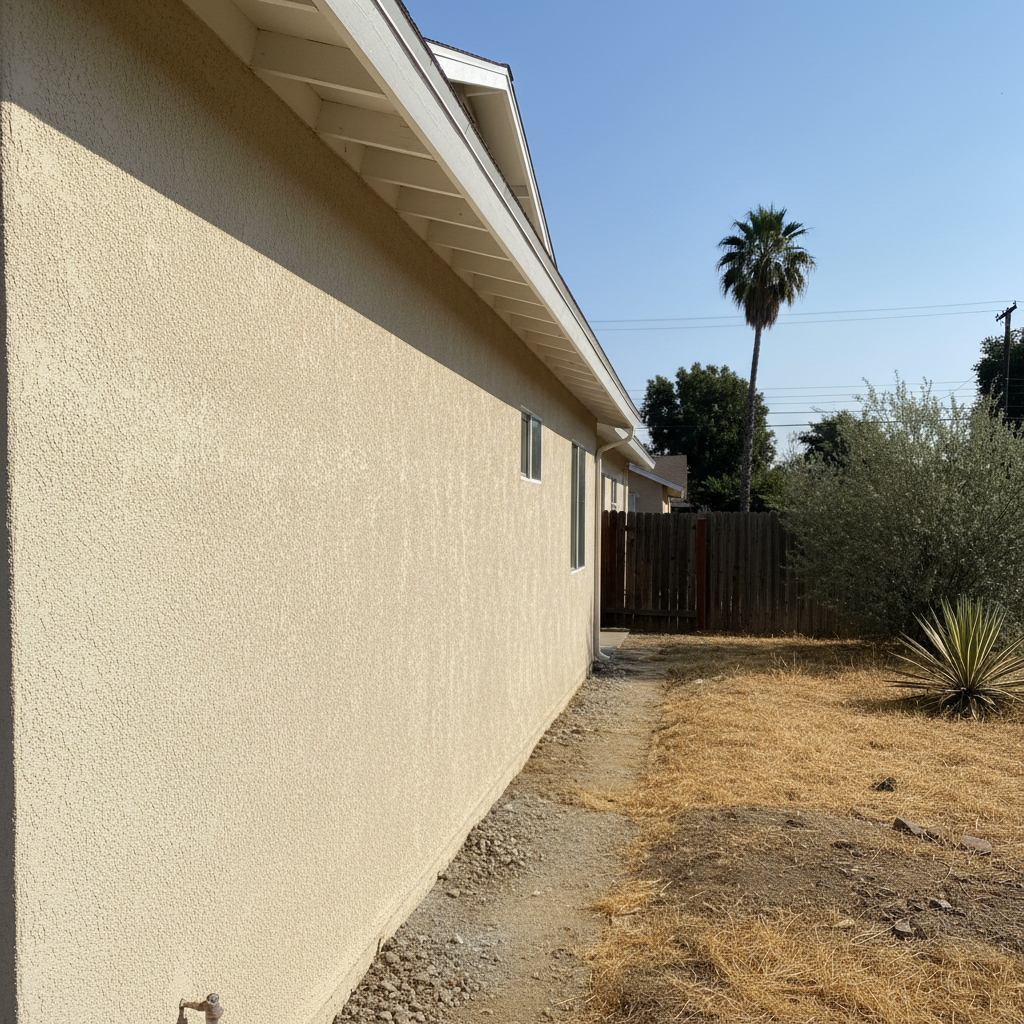
Alright, let's talk about stucco. You've got it on your home, and if it was put on right, it's a tough, durable finish. But 'durable' doesn't mean 'set it and forget it.' Especially here in Pomona, with our hot, dry summers and occasional heavy winter rains, your stucco needs a little attention to really go the distance. I've seen plenty of homes in areas like Phillips Ranch or even older spots downtown where a little preventative care could've saved folks a lot of headaches and money down the road.
Making Your Stucco Last Longer
The biggest thing you can do to extend your stucco's life is simple: keep water out. Stucco's built to shed water, not soak it up. Any place water can sit, get absorbed, or become trapped behind the finish is going to cause problems. So, what does that mean for you?
- Good Drainage is Key: Make sure those gutters are clean and working properly. Downspouts should direct water well away from your foundation. If you see water pooling around your house after a rain, that's a red flag, right there.
- Smart Landscaping: Don't let plants, bushes, or trees grow right up against your stucco. They hold moisture, and that's bad news. Keep them trimmed back, ideally a foot or more away. Also, try to avoid planting anything that needs constant watering right next to the house.
- Sealants and Flashing: Check around windows, doors, and any penetrations (like pipes or vents) for cracks in the caulk or flashing. These are prime entry points for water. If the caulk looks dried out, cracked, or is pulling away, it's time to re-seal.
- Regular Cleaning: Dirt and grime can hold moisture and encourage mold or mildew growth, especially on the north side of a house that doesn't get much sun. A gentle wash with a garden hose and a soft brush (no high-pressure washers, please!) can do wonders.
What Regular Maintenance Looks Like
It's not rocket science, but it does take a bit of looking. I tell my clients to do a walk-around inspection of their home at least twice a year. Spring and fall are good times. You're just looking for anything out of the ordinary.
- Visual Inspection: Walk around your house. Look closely at the stucco. Are there any new cracks? Any discoloration? Is anything growing on it that shouldn't be there?
- Check for Cracks: Small hairline cracks are pretty normal with stucco, especially as a house settles or from temperature changes. These usually aren't a big deal. But if you see cracks that are wider than a credit card, or if they're running in a spiderweb pattern, or if they're horizontal and extending for several feet, those need attention.
- Look for Stains: Dark streaks, especially under windows or near the roofline, often mean water is getting in somewhere. Green or black patches could be mold or mildew, which usually indicates a moisture issue.
- Inspect Attachments: Check where anything attaches to your house – light fixtures, hose bibs, railings, etc. Make sure they're still tight and that the seal around them is intact.
Warning Signs of Bigger Problems
Some things are more than just cosmetic. If you see any of these, don't just ignore them:
- Bulging or Soft Spots: If you press on the stucco and it feels soft, spongy, or you see a bulge, that's a serious sign of trapped moisture and rot underneath. This is a big one.
- Persistent Staining: If you clean a stain and it keeps coming back in the same spot, you've got an ongoing water intrusion problem.
- Large or Expanding Cracks: As I said, small cracks are usually fine. But if a crack is getting bigger, or if you can see daylight through it, or if it's letting water in, it needs to be fixed.
- Efflorescence: This is that white, powdery substance that sometimes appears on masonry. It's mineral salts left behind when water evaporates from inside the wall. It means water is getting in and moving through the stucco.
- Peeling Paint or Stucco Coating: If your stucco is painted or has a coating, and it's peeling, blistering, or flaking off, it could be a sign of moisture pushing through from behind.
When to Call a Professional
Look, a lot of minor stuff you can handle yourself. Re-caulking a window, a gentle wash – totally doable. But there are times when you really need to bring in someone who knows what they're doing. You wouldn't try to re-wire your whole house, right? Same idea here.
You should call a professional like us at Alpha Stucco Pomona if you see:
- Any signs of significant water intrusion: Bulging stucco, persistent dark stains, or widespread efflorescence. These aren't just surface issues; they mean there's damage happening to the structure underneath.
- Large, structural cracks: Cracks that seem to go all the way through the stucco, or that are very wide, often indicate foundation movement or other structural issues that need a pro's eye.
- Damage around windows or doors: These are critical areas for water sealing. If you're not confident in your ability to properly flash and seal these openings, don't mess with it. Improper repairs can make things worse.
- You're just not sure: If you see something that worries you and you can't figure out what's going on, it's always better to get an expert opinion. A small problem caught early is always cheaper to fix than a big one that's been festering for months or years.
Your stucco is a big part of your home's protection and curb appeal. A little regular care goes a long way in keeping it looking good and performing its job for decades. Don't wait until you've got a major leak or rot to pay attention to it.