Planning Your Stucco Painting Project: What to Know
So, you're thinking about giving your stucco home a fresh coat of paint? That's a really smart move. A good paint job doesn't just make your house look amazing; it also adds another layer of protection to your stucco. That's super important here in Pomona, especially with our scorching summers and those heavy rains we sometimes get. But, hey, it's not just about picking a color and slapping it on. There's a real process involved if you want it done right and, more importantly, if you want it to actually last.
The Timeline: What to Expect from Start to Finish
Let's talk about how long this whole thing actually takes. It's definitely not an overnight job, and trying to rush it usually just leads to a crummy result. Here’s a rough breakdown of what you can expect:
Initial Contact & Estimate (1-2 weeks): You'll probably call a few different contractors, including us here at Alpha Stucco Pomona, to get some quotes. We'll swing by, check out your house, measure things up, and chat about what you need. Good contractors tend to be booked out a little ways, so don't expect someone to start tomorrow, you know?
Color Selection & Prep Work (1-3 weeks): Once you've chosen your contractor, you'll nail down your paint color. This might mean painting some samples on a small, out-of-the-way spot on your house to see how they look in different light. Meanwhile, the contractor will get the project scheduled. This is also when you'll be doing your part to get ready, which we'll cover in a bit.
The Actual Painting (3-7 days, usually): This is the hands-on part, the real work. For an average-sized, single-story home, the actual painting usually takes less than a week. Bigger homes, multi-story places, or properties that need a lot of stucco repair before painting will naturally take longer. Weather also plays a huge role; you just can't paint in the rain or when it's super humid.
Curing & Final Touches (Ongoing): The paint needs time to fully cure, which can actually take weeks depending on the product and the weather. You'll want to do a final walkthrough with your contractor to make sure everything looks good and take care of any touch-ups.
All in all, from your very first phone call to that last brush stroke, you're probably looking at a 4-8 week process. Don't let anyone tell you they can do it perfectly in a couple of days — unless your house is, like, a tiny shed.
What Happens During the Painting Process?
When we're on the job, here's what you'll see us doing:
Surface Preparation: This is probably the most important step, honestly, and it's where a lot of DIYers really mess up. We'll power wash your entire house to get rid of dirt, grime, mildew, and any loose paint. Then, we'll check the stucco carefully for cracks, holes, or damage. Any necessary repairs will get done. You simply can't paint over bad stucco; it won't stick, and it'll look awful in no time. We'll also scrape any loose paint and sand down rough spots. This prep work alone can easily take a day or two.
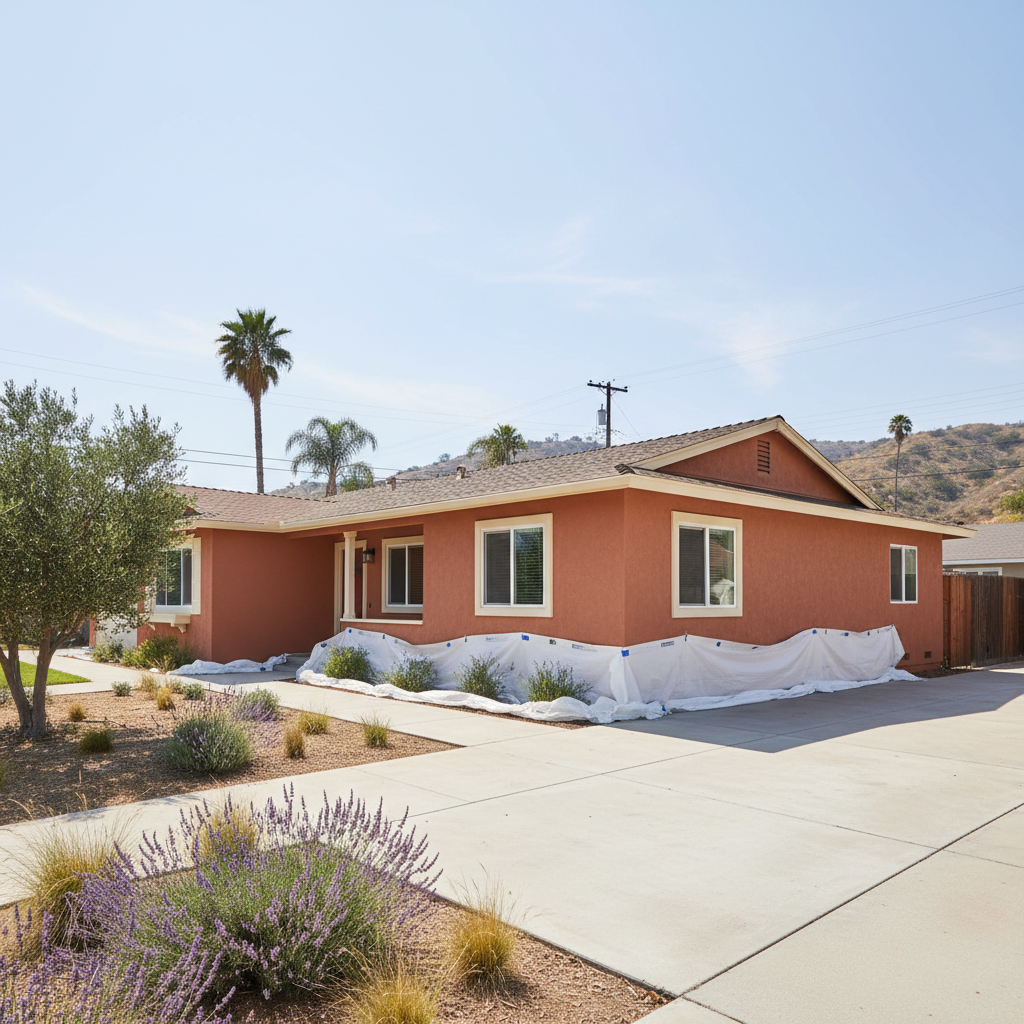
Masking & Protecting: Before any paint even comes out of the can, we'll carefully mask off windows, doors, light fixtures, and anything else that shouldn't get paint on it. We'll lay down drop cloths to protect your landscaping, walkways, and driveway. This isn't just about being tidy; it's about being professional.
Priming (if needed): Depending on how your existing paint looks, the type of new paint we're using, or if there were extensive repairs, we might put down a primer. Primer really helps the new paint stick better and gives us a nice, even surface for the topcoat.
Painting: This is the fun part, right? We'll apply the paint, usually two coats, using sprayers for efficiency and a super smooth finish. Then we'll back-roll or brush it to really work the paint into the stucco's texture. Corners and trim work are often done by hand for that extra precision.
Clean Up: Once the painting is all done, we'll remove all the masking, drop cloths, and equipment. We'll do a thorough clean-up, leaving your property looking even better than we found it.
How to Prepare Your Home for the Painters
You've got a role to play too! Doing these things before we even arrive will make the job go so much smoother and faster:
Clear the Perimeter: Move any patio furniture, grills, potted plants, garden hoses, and anything else away from the house. We need clear access to all the walls.
Trim Landscaping: If you have bushes or trees right up against the house, trim them back a foot or two. This gives us room to work and helps keep paint off your plants.
Secure Pets: Keep your pets indoors or in a secure, enclosed area away from the work zone. We'll have ladders, equipment, and people moving around, after all.
Address Sprinklers: Make sure your sprinkler system isn't set to run during painting days. Wet walls are a definite no-go.
Inform Neighbors: It's always a good idea to give your immediate neighbors a heads-up that you'll have painters on site. There might be some noise or equipment around, which is just common courtesy.
Check Windows & Doors: Make sure all your windows and doors are closed and locked when we're working. We'll be masking them, but it's always good practice to double-check.
Questions to Ask Before Signing a Contract
Don't just sign the first thing someone puts in front of you. Ask these questions:
What kind of paint do you use, and why? There are big differences in quality and type. For stucco, you really want something that can breathe and is flexible. We often recommend elastomeric paints because they're super durable and can even bridge hairline cracks, especially on older homes in places like the Phillips Ranch neighborhood where foundations can shift a bit over time.
What's included in the surface preparation? Get specific. Does it cover power washing, scraping, patching minor cracks, or even major stucco repairs? Make sure it's all in writing.
How many coats of paint will you apply? Two coats are pretty standard for good coverage and durability. If they say one, well, be a little wary.
What's your warranty on the work? A reputable contractor will stand behind what they do. Ask about both labor and material warranties.
Are you licensed and insured? This is non-negotiable, period. Ask for proof of both. You absolutely do not want to be liable if someone gets hurt on your property.
What's the payment schedule? Typically, it's a deposit upfront, with the rest due once you're happy with the completed job. Don't pay for the whole thing before it's done.
Who will be the main point of contact? You need to know exactly who to talk to if you have questions or concerns during the project. It just makes things easier.
Painting your stucco is a big investment, no doubt about it. Doing it right means it'll look fantastic and protect your home for years to come. Take your time with the planning, ask the right questions, and pick a contractor you truly trust. It'll definitely pay off in the long run.